Understanding Whole Grains
February 2026
The Debate About Grains
Grains have become a controversial topic in nutrition discussions, with conflicting claims about their role in healthy eating patterns. Some sources advocate for grain consumption while others recommend avoiding them entirely. This article examines common myths about grains and presents what scientific research actually demonstrates.
Understanding the distinction between whole grains and refined grains is important for evaluating claims about grain consumption. These two categories differ significantly in their nutritional composition and how they are processed.
Myth: All Grains Are Nutritionally Identical
A common misconception treats all grains as equivalent. In reality, whole grains and refined grains have different nutritional profiles due to differences in processing.
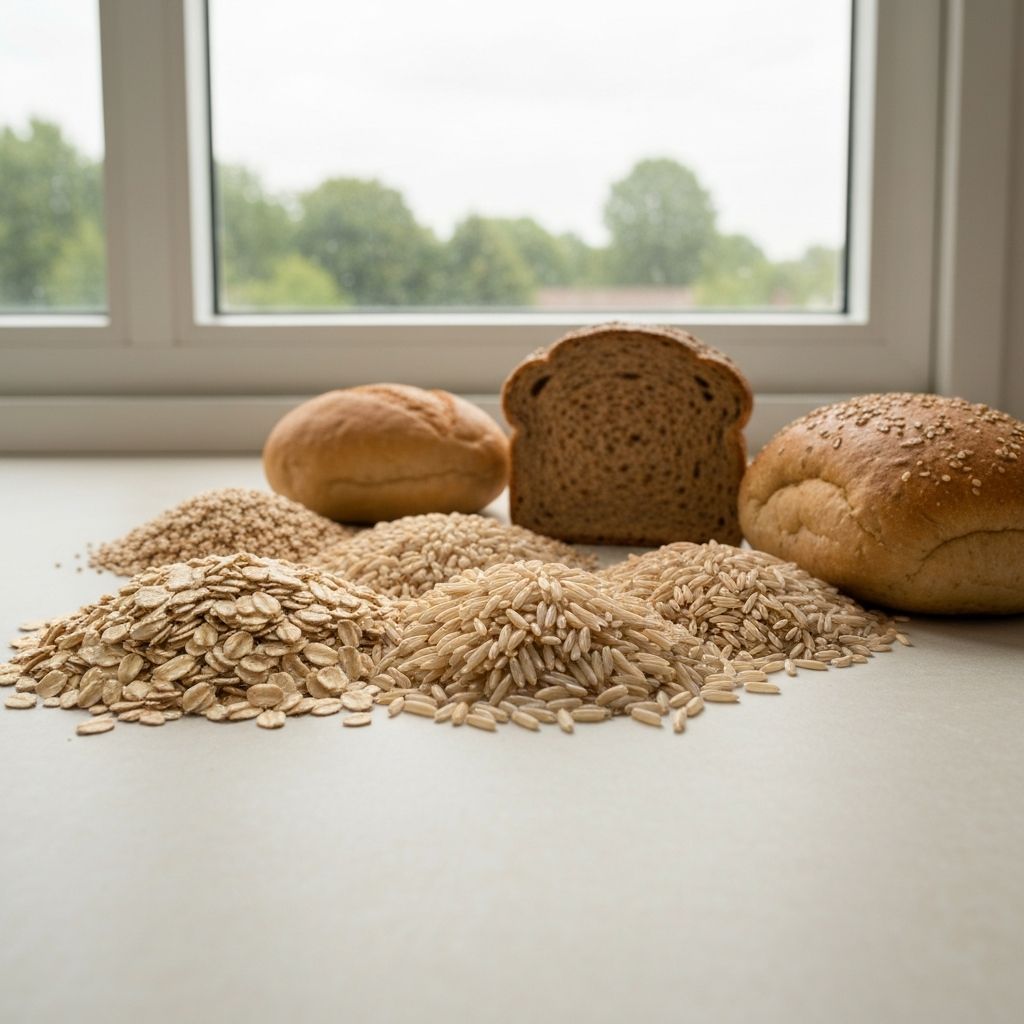
Whole grains contain the entire grain kernel including the bran, germ, and endosperm. Refined grains have been processed to remove the bran and germ, which also removes certain nutrients and fiber. This processing creates products with different nutritional characteristics.
Research distinguishes between whole and refined grains when examining dietary patterns and health relationships. Treating all grains as identical overlooks these important differences that researchers have documented.
Myth: Grains Are Essential for Everyone
Some nutrition guidance implies that grains are necessary components of all healthy diets. However, human dietary patterns vary considerably across cultures and individuals, and many different eating patterns can provide adequate nutrition.
While grains can be part of varied dietary approaches, they are not uniquely essential in the sense that the nutrients they provide cannot be obtained from other food sources. Different populations have thrived on diverse dietary patterns, some including grains prominently and others not.
Individual responses to grain consumption vary based on factors including digestive characteristics, activity levels, and overall dietary context. What works well for one person may not be optimal for another.
Myth: Grains Universally Cause Specific Health Issues
Opposite claims sometimes appear asserting that grains inherently cause particular health problems for everyone. This oversimplifies the complex relationship between food and health.
Some individuals have specific conditions that require avoiding certain grains or grain components. For most people without these specific conditions, research does not support universal claims that grains necessarily cause particular health problems.
The relationship between grain consumption and health outcomes appears to depend on many factors including the type of grain, overall dietary pattern, individual characteristics, and lifestyle factors. Absolute statements in either direction oversimplify what research actually shows.
Myth: Gluten-Free Automatically Means Healthier
The popularity of gluten-free products has led to a perception that avoiding gluten provides health benefits for everyone. However, scientific evidence does not support this assumption for people without gluten-related conditions.
Individuals with celiac disease or diagnosed gluten sensitivity must avoid gluten for health reasons. For others without these conditions, research has not demonstrated that gluten-free diets provide inherent health advantages.
Gluten-free products are not necessarily nutritionally superior to their gluten-containing counterparts. Some gluten-free processed foods may have different nutritional profiles that are not automatically better or worse, just different.
Understanding Grain Research
When evaluating claims about grains, it is important to consider how research is conducted. Observational studies examine associations between grain consumption patterns and health outcomes in populations, while controlled experiments test specific hypotheses under defined conditions.
Both research approaches have strengths and limitations. Observational studies can identify patterns but cannot prove causation. Controlled experiments can test specific mechanisms but may not reflect real-world complexity.
Research findings about grains should be understood in their full context, including study design, population studied, and the distinction between correlation and causation.
The Role of Overall Dietary Patterns
Scientific evidence increasingly suggests that overall dietary patterns matter more than individual foods or food groups in isolation. How grains fit into someone's total diet, including what they are eaten with and what they replace, influences their role in nutrition.
Research examining dietary patterns rather than isolated foods often provides more applicable insights. Grains consumed as part of a varied diet rich in vegetables, fruits, and other whole foods exist in a different context than grains consumed as the primary food source with minimal variety.
Individual factors including activity level, health status, cultural practices, and personal preferences all influence what dietary patterns work well for different people.
Educational Context and Limitations
This article provides educational information about common misconceptions regarding grains. It describes general scientific findings and does not constitute individual dietary advice or recommendations.
Individual dietary choices should consider personal health circumstances, preferences, and other factors. This information is not intended to replace individual assessment or professional guidance.
Nutrition science continues to develop, and understanding of these topics evolves as new research emerges. The information presented reflects current scientific perspectives but acknowledges ongoing research and discussion in this field.